Obama Administration barred officials from screening foreign visa applicants' social media
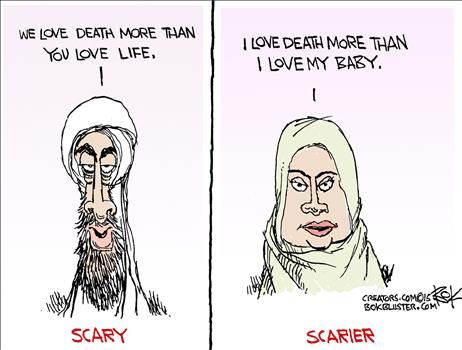
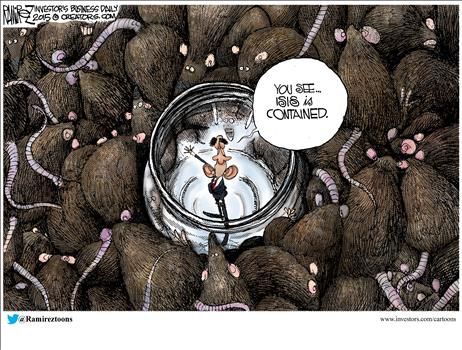
appropriate cartoon
http://media.townhall.com/Townhall/Ca...
Obama Administration Barred Officials From Screening Foreign Visa Applicants' Social
Guy Benson
UPDATE: Fearing 'Bad Public Relations,' Obama Administration Barred Officials From Screening Foreign Visa Applicants' Social Media
Guy Benson | Dec 14, 2015
Guy Benson
Share on Facebook
317
317 SHARES
UPDATE: It gets worse. ABC News is reporting that Homeland Security officials have been bound by a secret US policy not to scrutinize visa applicants' social media footprint because the Obama administration feared bad press over "civil liberties." This represents an stunning, intentional dereliction of duty -- all for PR:
Fearing a civil liberties backlash and "bad public relations" for the Obama administration, Homeland Security Secretary Jeh Johnson refused in early 2014 to end a secret U.S. policy that prohibited immigration officials from reviewing the social media messages of all foreign citizens applying for U.S. visas, a former senior department official said. "During that time period immigration officials were not allowed to use or review social media as part of the screening process," John Cohen, a former acting under-secretary at DHS for intelligence and analysis. Cohen is now a national security consultant for ABC News. One current and one former senior counter-terrorism official confirmed Cohen's account about the refusal of DHS to change its policy about the public social media posts of all foreign applicants.
This administration seeks to curtail US citizens' second amendment rights rights -- relying, in part, on a secret list, without due process -- but exposes the country to risk by bending over backwards to safeguard foreign nationals' "civil liberties." As noted below, these are people applying for the privilege of entering our country. Some defenders of the policy say sifting through a massive number of applicants' Facebook and Twitter feeds would be logistically impossible, given the resources available. If that's true, what does that say about the thoroughness our current vetting standards? And if that's true, are we allowed to suggest that either (a) maybe we should think about stemming the flow of immigrants to a rate at which we can properly screen people, or (b) perhaps some form of "profiling" to trigger additional screening should be considered? Or aren't we allowed to address uncomfortable realities?
UPDATE II - They've gotten their "bad public relations," alright, just not the kind they were anticipating. And now -- surprise! -- their insane, politically-correct policy is reportedly on the chopping block. All it took was 14 Americans murdered on US soil by ISIS loyalists:
--- Original Post ---
Remember how the US State Department declared itself perfectly "satisfied" with the visa screening process that green-lit San Bernadino terrorist Tashfeen Malik's entry into the country -- even as concerning details about her background and family have come to light? Set aside the detail that her husband was reportedly in contact with several suspected jihadists who had attracted the feds' attention. Set aside the apparent fact that she provided false information on her visa application, which then sailed through. Let's focus on this New York Times story published over the weekend, which contains frightening and baffling information:
Tashfeen Malik, who with her husband carried out the massacre in San Bernardino, Calif., passed three background checks by American immigration officials as she moved to the United States from Pakistan. None uncovered what Ms. Malik had made little effort to hide — that she talked openly on social media about her views on violent jihad. She said she supported it. And she said she wanted to be a part of it. American law enforcement officials said they recently discovered those old — and previously unreported — postings as they pieced together the lives of Ms. Malik and her husband, Syed Rizwan Farook, trying to understand how they pulled off the deadliest terrorist attack on American soil since Sept. 11, 2001. Had the authorities found the posts years ago, they might have kept her out of the country. But immigration officials do not routinely review social media as part of their background checks, and there is a debate inside the Department of Homeland Security over whether it is even appropriate to do so...
Ms. Malik faced three extensive national security and criminal background screenings. First, Homeland Security officials checked her name against American law enforcement and national security databases. Then, her visa application went to the State Department, which checked her fingerprints against other databases. Finally, after coming to the United States and formally marrying Mr. Farook here, she applied for her green card and received another round of criminal and security checks. Ms. Malik also had two in-person interviews, federal officials said, the first by a consular officer in Pakistan, and the second by an immigration officer in the United States when she applied for her green card. All those reviews came back clear, and the F.B.I. has said it had no incriminating information about Ms. Malik or Mr. Farook in its databases. The State Department and the Department of Homeland Security have said they followed all policies and procedures.
Several stunners. She passed three separate, "extensive" background screenings, none of which examined her social media footprint, which was rife with posts promoting radical Islamism, dating back years. (Shortly before carrying out their deadly mission, both Malik and Farook pledged allegiance to ISIS on social media). One of the reasons that these very public red flags weren't caught is that our national security apparatus can't decide whether checking social media as part of the immigration vetting process is appropriate. Think about that. The Times story goes on:'
Use the URL it's in two places.
Appropriate Cartoon
http://media.townhall.com/Townhall/Ca...
http://townhall.com/tipsheet/guybenso...
http://media.townhall.com/Townhall/Ca...
Obama Administration Barred Officials From Screening Foreign Visa Applicants' Social
Guy Benson
UPDATE: Fearing 'Bad Public Relations,' Obama Administration Barred Officials From Screening Foreign Visa Applicants' Social Media
Guy Benson | Dec 14, 2015
Guy Benson
Share on Facebook
317
317 SHARES
UPDATE: It gets worse. ABC News is reporting that Homeland Security officials have been bound by a secret US policy not to scrutinize visa applicants' social media footprint because the Obama administration feared bad press over "civil liberties." This represents an stunning, intentional dereliction of duty -- all for PR:
Fearing a civil liberties backlash and "bad public relations" for the Obama administration, Homeland Security Secretary Jeh Johnson refused in early 2014 to end a secret U.S. policy that prohibited immigration officials from reviewing the social media messages of all foreign citizens applying for U.S. visas, a former senior department official said. "During that time period immigration officials were not allowed to use or review social media as part of the screening process," John Cohen, a former acting under-secretary at DHS for intelligence and analysis. Cohen is now a national security consultant for ABC News. One current and one former senior counter-terrorism official confirmed Cohen's account about the refusal of DHS to change its policy about the public social media posts of all foreign applicants.
This administration seeks to curtail US citizens' second amendment rights rights -- relying, in part, on a secret list, without due process -- but exposes the country to risk by bending over backwards to safeguard foreign nationals' "civil liberties." As noted below, these are people applying for the privilege of entering our country. Some defenders of the policy say sifting through a massive number of applicants' Facebook and Twitter feeds would be logistically impossible, given the resources available. If that's true, what does that say about the thoroughness our current vetting standards? And if that's true, are we allowed to suggest that either (a) maybe we should think about stemming the flow of immigrants to a rate at which we can properly screen people, or (b) perhaps some form of "profiling" to trigger additional screening should be considered? Or aren't we allowed to address uncomfortable realities?
UPDATE II - They've gotten their "bad public relations," alright, just not the kind they were anticipating. And now -- surprise! -- their insane, politically-correct policy is reportedly on the chopping block. All it took was 14 Americans murdered on US soil by ISIS loyalists:
--- Original Post ---
Remember how the US State Department declared itself perfectly "satisfied" with the visa screening process that green-lit San Bernadino terrorist Tashfeen Malik's entry into the country -- even as concerning details about her background and family have come to light? Set aside the detail that her husband was reportedly in contact with several suspected jihadists who had attracted the feds' attention. Set aside the apparent fact that she provided false information on her visa application, which then sailed through. Let's focus on this New York Times story published over the weekend, which contains frightening and baffling information:
Tashfeen Malik, who with her husband carried out the massacre in San Bernardino, Calif., passed three background checks by American immigration officials as she moved to the United States from Pakistan. None uncovered what Ms. Malik had made little effort to hide — that she talked openly on social media about her views on violent jihad. She said she supported it. And she said she wanted to be a part of it. American law enforcement officials said they recently discovered those old — and previously unreported — postings as they pieced together the lives of Ms. Malik and her husband, Syed Rizwan Farook, trying to understand how they pulled off the deadliest terrorist attack on American soil since Sept. 11, 2001. Had the authorities found the posts years ago, they might have kept her out of the country. But immigration officials do not routinely review social media as part of their background checks, and there is a debate inside the Department of Homeland Security over whether it is even appropriate to do so...
Ms. Malik faced three extensive national security and criminal background screenings. First, Homeland Security officials checked her name against American law enforcement and national security databases. Then, her visa application went to the State Department, which checked her fingerprints against other databases. Finally, after coming to the United States and formally marrying Mr. Farook here, she applied for her green card and received another round of criminal and security checks. Ms. Malik also had two in-person interviews, federal officials said, the first by a consular officer in Pakistan, and the second by an immigration officer in the United States when she applied for her green card. All those reviews came back clear, and the F.B.I. has said it had no incriminating information about Ms. Malik or Mr. Farook in its databases. The State Department and the Department of Homeland Security have said they followed all policies and procedures.
Several stunners. She passed three separate, "extensive" background screenings, none of which examined her social media footprint, which was rife with posts promoting radical Islamism, dating back years. (Shortly before carrying out their deadly mission, both Malik and Farook pledged allegiance to ISIS on social media). One of the reasons that these very public red flags weren't caught is that our national security apparatus can't decide whether checking social media as part of the immigration vetting process is appropriate. Think about that. The Times story goes on:'
Use the URL it's in two places.
Appropriate Cartoon
http://media.townhall.com/Townhall/Ca...
http://townhall.com/tipsheet/guybenso...
Add Comment
All Comments Hide marked as read Mark all as read
- 2Posted by $ jbrenner 10 years, 6 months agoI am curious to see what those who say that a nation has no right to vette those who seek to enter that nation say about this situation. The presumption being made by those who insist upon the right to travel is that the travelers do not seek to destroy the nation to which they are traveling. Tashfeen Malik openly stated on Facebook her intentions, but the federal government insists that acting upon such public statements would be an invasion of her privacy. What Jeh Johnson of the Department of Homeland Insecurity said yesterday can only be said by those who are self-destructive.| Mark as read | Best of... | Permalink
- 2Posted by freedomforall 10 years, 6 months agoToo busy investigating the political enemies of Barrack and protecting the IRS that carried out the unconstitutional acts to use the NSA's unconstitutional invasion of American's privacy on obvious muslim threats.| Mark as read | Best of... | Permalink